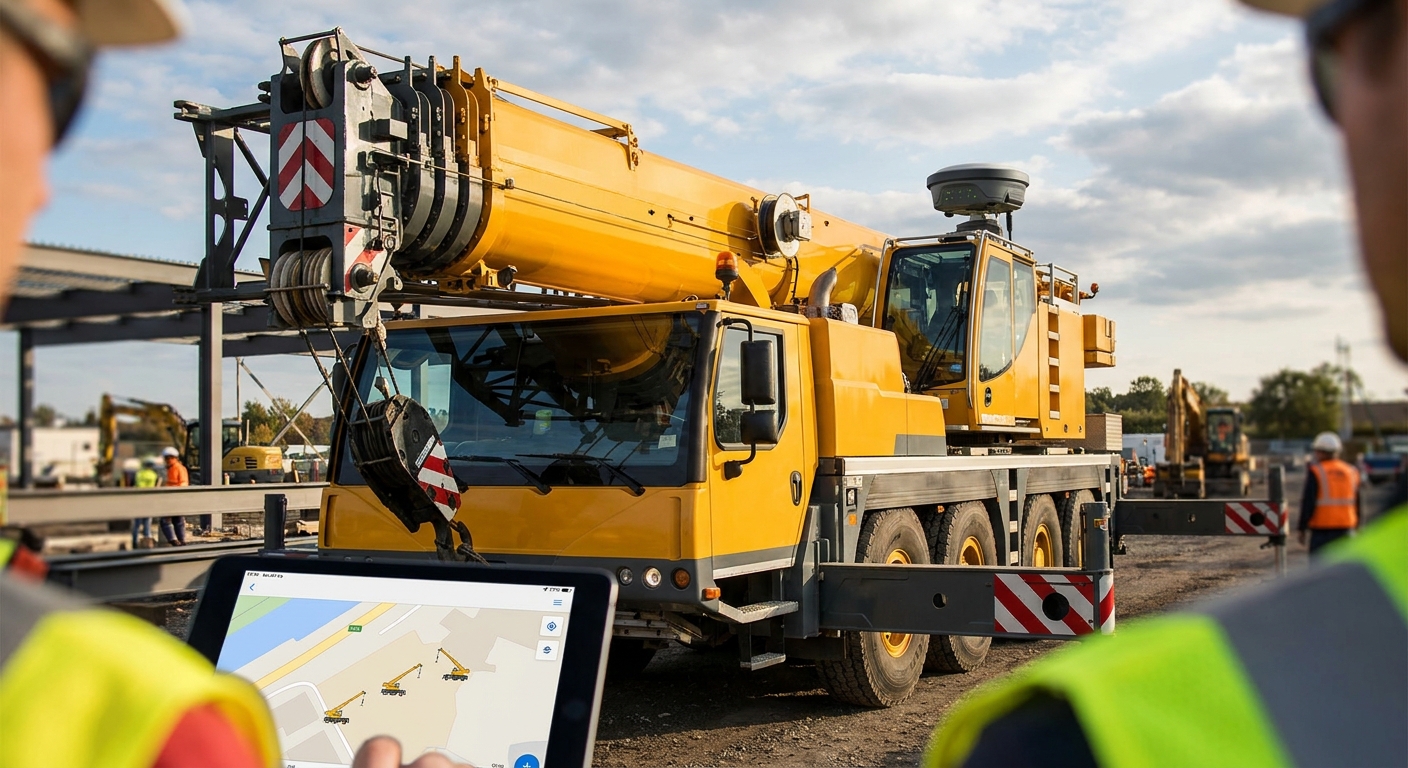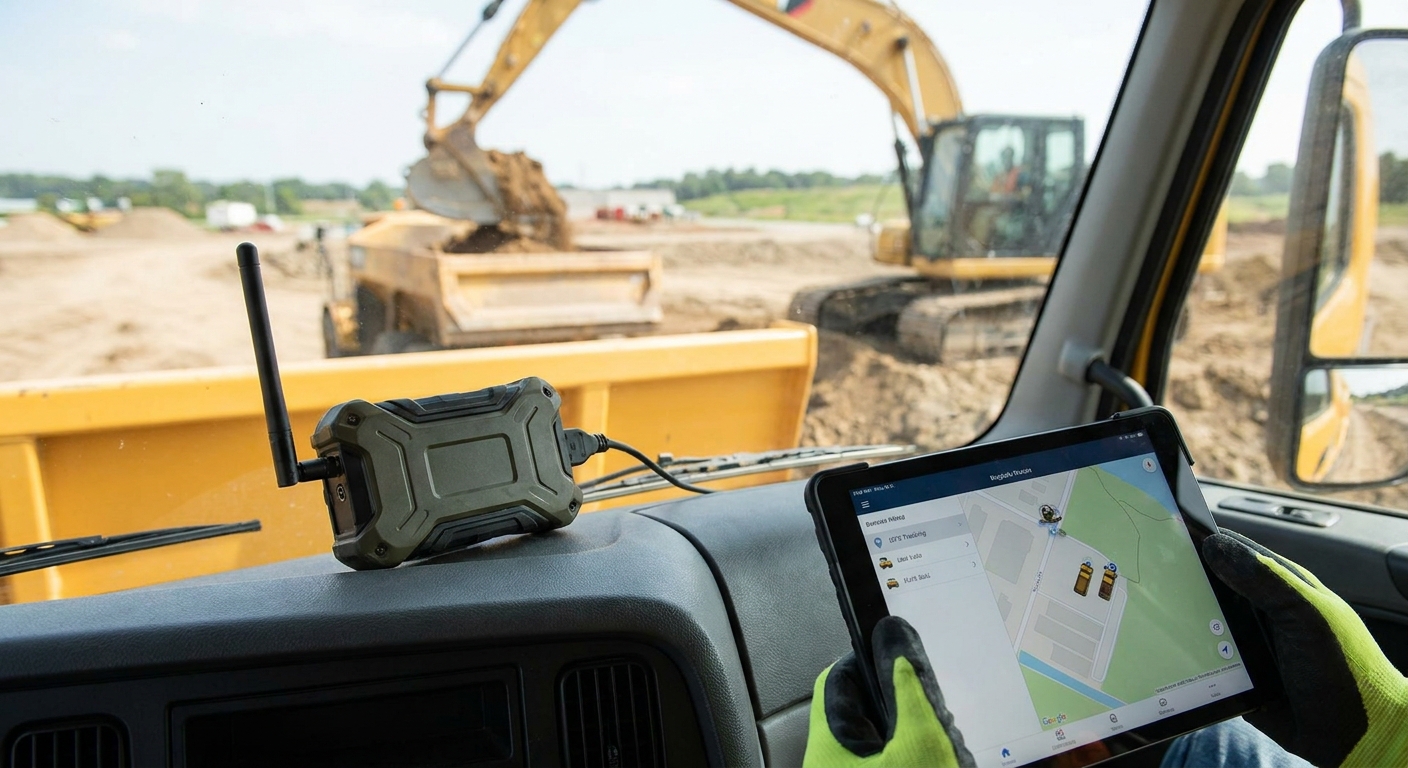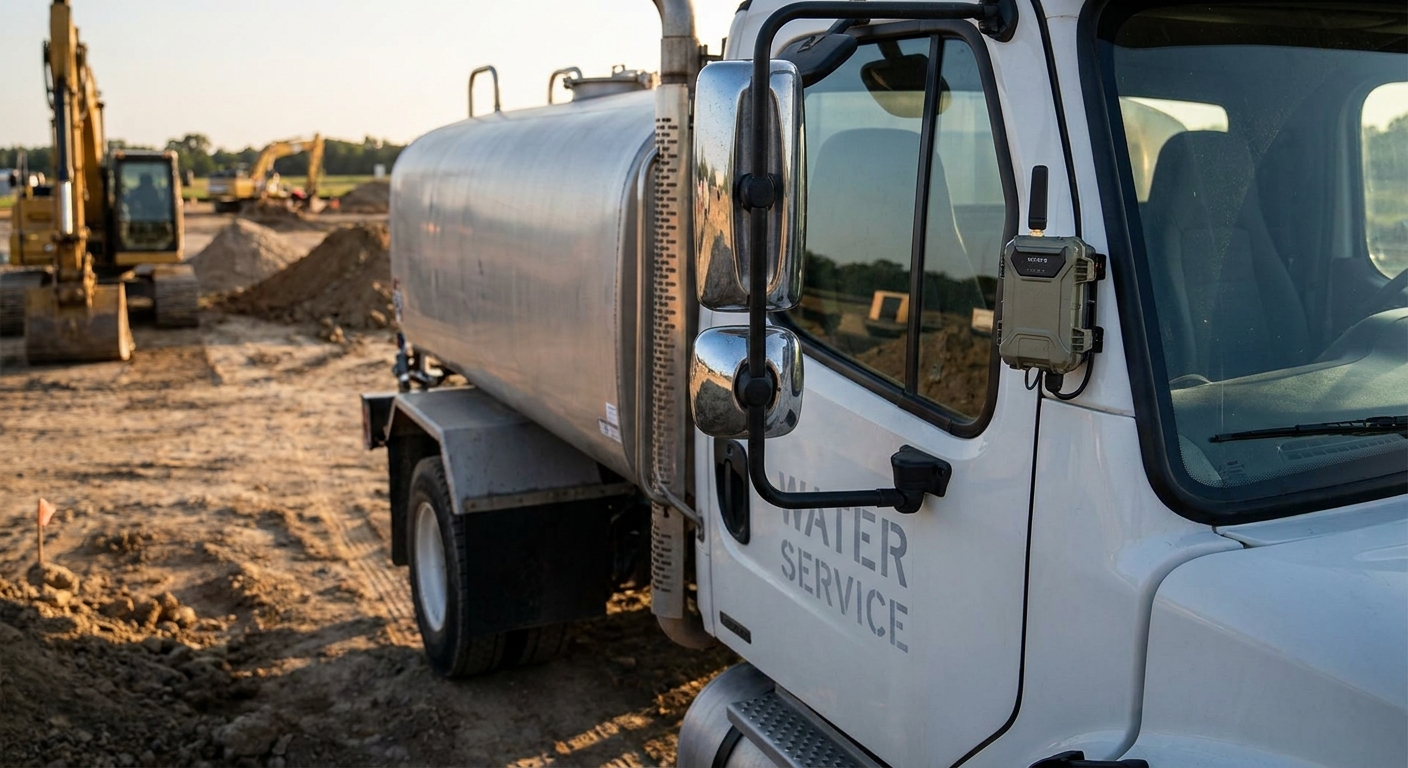
A GPS tracker for water trucks has to do more than drop a pin on a map — it needs to suit the truck's pump controls, support pre-start checks, and provide the evidence a construction or civil site requires. This guide breaks down what water truck operators should look for in a gps tracker for water trucks in 2026, and which hardware picks actually hold up on site.
- Ruptela Smart5 and Teltonika FMC650 are Teletrack's GPS tracking options for water trucks — Buy.
- Add a DashCam or DualCam where video evidence is needed for site safety or incident review — Consider.
- PROSTART pre-start and immobilisation locks out unsafe water trucks before shift start on construction and civil sites — Buy.
- Choose pump monitoring around the truck's actual pump setup: PTO-driven, separate manually controlled, or in-cab controlled.
- Month-to-month contracts beat multi-year lock-ins for hire fleets running seasonal water trucks in 2026.
Why this matters
A water truck isn't a delivery van with a bigger tank. It carries 1,000 to 15,000 litres of water for dust suppression, compaction support, or haul road watering, with pump controls that vary by build: PTO-driven, separate manually controlled, or operated from the cab. Location data alone tells you where the truck was — it does not show the operating state of the relevant pump controls or whether the operator completed a pre-start check before pulling onto a live site.
Most telematics platforms sold in Australia weren't built with any of that in mind. They track cars and light commercial vans well. Water trucks, water carts, and dust suppression units need the right diagnostics and monitoring for their actual pump configuration, plus pre-start safety gates where site rules require them.
Who a GPS tracker for water trucks is actually for
This guide is for fleet managers and owner-operators running water trucks and water carts in construction, civil, hire, and mining-adjacent trades — the businesses billing clients per litre or per hour of dust suppression and needing proof the work was actually done. If you're running one truck on a single job, a basic tracker might be enough. If you're running a fleet across multiple sites through Teletrack, the diagnostics and pre-start data matter as much as the dot on the map.
What to look for in a gps tracker for water trucks
Match monitoring to the pump configuration
Some water trucks use engine- or PTO-driven pumps, while others use separate manually controlled or in-cab controlled pumps. Confirm which signals are available on the specific truck before specifying hardware; a GPS-only tracker cannot establish pump activity on its own.
PROSTART-style pre-start and immobilisation
Sites are enforcing pre-start checks harder in 2026, and a water truck with a cracked hose or a faulty pump shouldn't be moving water on a live compaction job. A pre-start and immobilisation module stops the truck starting until the operator completes the checklist — that's a site compliance answer, not just a nice-to-have feature.
Rugged, vibration-tolerant installation
Water trucks work in the same dust and vibration environment as the plant they're servicing. Look for housings and mounting rated for that environment — IP67 is the benchmark most fleet-grade hardware targets — because a tracker that fails after six months on a corrugated haul road is a wasted install.
Pump monitoring for billing
If you're invoicing a client for dust suppression hours, pump activity data is the difference between an estimate and a defensible invoice. The monitoring method must match the truck's configuration, whether the pump is PTO-driven, separate manually controlled, or operated from the cab.
Geofencing across multi-site operations
Water truck fleets rarely sit on one job. Geofencing that flags when a truck leaves an approved haul road or enters a restricted zone catches misuse early, and it's the same feature that protects against a truck quietly doing unauthorised runs between sites.
Maintenance scheduling tied to pump and tank wear
Pumps wear out faster than engines on a water truck, and a tank with a slow leak doesn't show up on an odometer-based service schedule. Maintenance software that schedules around actual run-hours — not just kilometres — catches pump wear before it becomes a breakdown mid-shift.
Top picks for water truck telematics in 2026
Ruptela Smart5 — the fleet tracking pick. Ruptela Smart5 is a Teletrack hardware option for water trucks that need fleet GPS tracking. Confirm the available vehicle and pump signals against the individual truck before installation. Verdict: Buy for fleet tracking.
Teltonika FMC650 — the flexible tracking pick. Teltonika FMC650 is a Teletrack hardware option for water trucks, with DashCam or DualCam options where video evidence is required. Select the camera configuration around the site's safety and incident-review requirements. Verdict: Buy where camera evidence is required.
PROSTART — the compliance pick. PROSTART pre-start and immobilisation gates a water truck's start until the operator runs through the checklist, which matters on sites where a principal contractor audits pre-start records. It's not a standalone location tracker — it's the module that keeps a fleet audit-ready in 2026. Verdict: Buy for construction and civil fleets.
Generic consumer trackers — the wildcard. Cheap consumer GPS trackers show up in fleet conversations because they're inexpensive per unit, but they do not account for a water truck's pump configuration or provide a pre-start safety gate. For a water truck billing dust suppression hours, that is a blind spot, not a saving. Verdict: Skip.
Talk to Teletrack about your water truck fleet
See how CANBUS, PROSTART and pump monitoring fit your sites.
What to avoid
- Trackers selected without checking the pump configuration. Location alone does not prove pump activity, whether the pump is PTO-driven, separate manually controlled, or operated from the cab.
- Multi-year lock-in contracts. Water truck work is seasonal on a lot of civil jobs — a month-to-month arrangement matches the way the work actually runs, and avoids paying for hardware sitting idle off-season.
- Hardware with no pre-start module. A tracker that can't gate a start before a checklist is complete won't satisfy the pre-start audits more principal contractors are running in 2026.
Verdict comparison
| Pick | CANBUS/J1939 | Pre-start module | Best for | Verdict |
|---|---|---|---|---|
| Ruptela Smart5 | Confirm by truck configuration | Optional add-on | Fleet GPS tracking | Buy |
| Teltonika FMC650 | Confirm by truck configuration | Optional add-on | GPS tracking with DashCam or DualCam options | Buy |
| PROSTART | N/A (safety layer) | Yes | Site compliance | Buy |
| Consumer trackers | No pump-configuration assessment | No | Nothing water-truck specific | Skip |
FAQ
What's the best gps tracker for water trucks in 2026?
Ruptela Smart5 and Teltonika FMC650 are Teletrack's GPS tracking options for water trucks in 2026. Add DashCam or DualCam where site safety or incident-review requirements call for video evidence, and pair with PROSTART where pre-start audits are required.
Is PROSTART pre-start necessary for water truck fleets?
It's necessary for any water truck working on a construction or civil site enforcing pre-start compliance. PROSTART immobilises the truck until the operator completes the checklist, which gives a fleet an audit-ready record instead of a paper form nobody checks.
How much does GPS tracking for water trucks cost in Australia?
GPS tracking for water trucks is typically billed per vehicle per month, with the price depending on the hardware, camera configuration and whether PROSTART is added. Confirm current pricing directly with the provider before committing to a plan.
Can GPS trackers monitor water pump run-time?
A GPS tracker does not establish pump activity on its own. The right monitoring method depends on whether the truck has a PTO-driven pump, a separate manually controlled pump, or an in-cab controlled pump.
Does GPS tracking work for water trucks on sites without mobile coverage?
Most fleet-grade units store location and event data on-device and sync once coverage returns, so a dead zone on a remote civil site doesn't erase the record. Confirm buffering behaviour with the hardware vendor before relying on it for compliance data.
Is CANBUS integration necessary for water trucks?
CANBUS integration depends on the vehicle and the data the fleet needs. Confirm the available signals on each water truck before specifying hardware; GPS location alone does not show pump activity.
What's the difference between a consumer GPS tracker and fleet telematics for water trucks?
A consumer tracker gives location and basic ignition status; fleet telematics can add geofencing, camera options and pre-start safety gating. For a water truck fleet, the required setup depends on the truck's pump configuration and site rules.
How long does it take to install a GPS tracker on a water truck?
Installation is usually handled by a professional installer during a routine service window rather than a fixed number of hours across every truck. The installation approach depends on the selected hardware, camera configuration and vehicle wiring.
One last thing
The fleets that get the most out of a gps tracker for water trucks aren't the ones with the most dashboards — they're the ones that match the tracking setup to the pump controls and evidence required on site. A truck's location record and the relevant pump activity evidence tell you more than an odometer alone, which is why the 2026 specification should start with the individual truck build.